Are you tired of your energy bills skyrocketing every winter?
Do you struggle to keep your garage at a comfortable temperature year-round?
If so, then it’s time to consider insulating your garage door.
Garage door insulation not only helps improve energy efficiency, but it also provides better temperature control, making your garage a more comfortable space for various activities.
By insulating your garage door, you can significantly reduce heat loss during the colder months and prevent hot air from seeping in during the summer. This means that your heating and cooling systems won’t have to work as hard, ultimately saving you money on your energy bills.
Additionally, a well-insulated garage door helps maintain a consistent temperature, making it ideal for those who use their garage as a workshop, home gym, or even an extra living space.
So, if you’re looking to improve energy efficiency and create a more comfortable environment in your garage, insulating your garage door is a smart and cost-effective solution.
Benefits of Garage Door Insulation
You’ll be amazed at the benefits you’ll experience when you insulate your garage door! Not only will insulation make your garage more energy-efficient, but it’ll also help with temperature control.
Insulating your garage door can significantly reduce the amount of heat or cold that enters your garage, making it easier to maintain a comfortable temperature inside.
One of the main benefits of garage door insulation is increased energy efficiency. When your garage door is properly insulated, it acts as a barrier that prevents air from escaping or entering your garage. This means that your heating and cooling systems won’t have to work as hard to maintain a consistent temperature, resulting in lower energy bills.
Additionally, insulation can help reduce drafts and air leaks, making your garage a more comfortable space to work in.
Another advantage of insulating your garage door is improved temperature control. Whether you use your garage as a workshop, a gym, or simply for storage, maintaining a comfortable temperature is essential. Insulation helps to regulate the temperature inside your garage, preventing extreme heat or cold from seeping in. This not only makes it more pleasant to spend time in your garage, but it also helps protect any belongings that may be sensitive to temperature fluctuations.
Insulating your garage door offers a multitude of benefits. From increased energy efficiency to improved temperature control, insulation can make a significant difference in the comfort and functionality of your garage. So, don’t wait any longer – take the step towards a more energy-efficient and comfortable garage by insulating your garage door today!
Types of Insulation Materials
Get ready to discover the various materials that can make a significant impact on your garage’s thermal performance. When it comes to garage door insulation, there are a few types of materials commonly used.
One popular option is polystyrene foam, which is lightweight and easy to install. It provides excellent insulation and helps to regulate the temperature inside your garage.
Another common choice is polyurethane foam, which is known for its superior insulation properties. It forms a tightly sealed barrier, preventing air leakage and reducing heat transfer. This type of insulation is great for those who want to maximize energy efficiency and maintain a comfortable temperature in their garage.
Fiberglass insulation is also a popular choice for garage doors. It is made from tiny glass fibers that are tightly packed together. Fiberglass insulation is known for its ability to resist heat transfer and reduce noise. It is a cost-effective option that can help improve the energy efficiency of your garage.
Reflective foil insulation is another option to consider. This material is made from aluminum foil and a layer of foam or bubble wrap. It works by reflecting radiant heat away from your garage, keeping it cooler in the summer and warmer in the winter. Reflective foil insulation is easy to install and can make a significant difference in your garage’s temperature control.
There are several types of insulation materials available for your garage door, each with its own unique benefits. Whether you choose polystyrene foam, polyurethane foam, fiberglass insulation, or reflective foil, adding insulation to your garage door can greatly improve its energy efficiency and temperature control. So, take the time to explore these options and find the material that best suits your needs. With the right insulation, you can enjoy a more comfortable garage space while saving on energy costs.
Steps to Insulate Your Garage Door
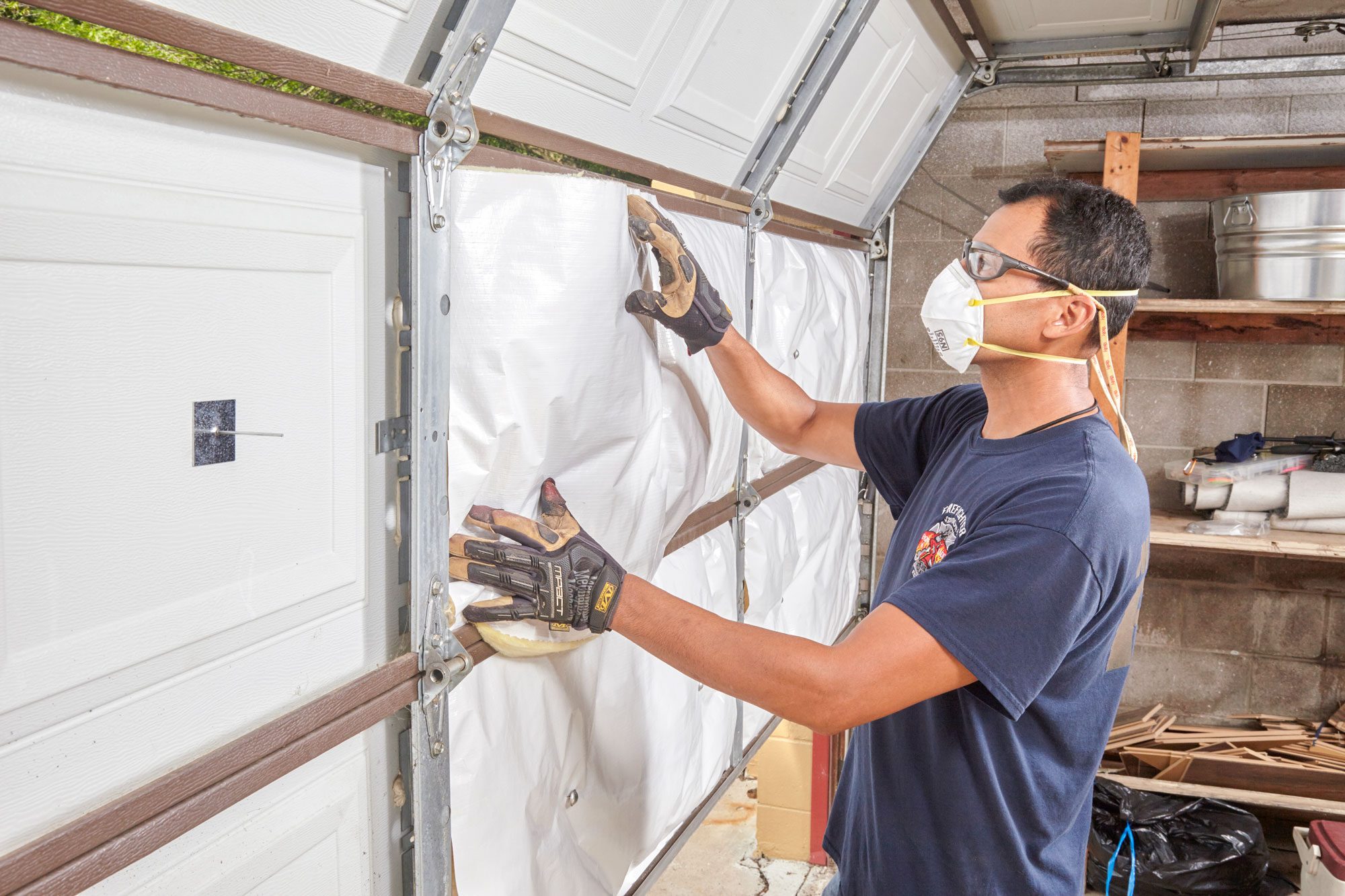
Start by gathering all the necessary materials and preparing to transform your garage door into a cozy and efficient space.
The first step is to measure the dimensions of your garage door panels so that you can accurately cut the insulation material to fit. Make sure to account for any windows or vents on the door as well. Once you have the measurements, you can purchase the appropriate insulation material, such as foam board or reflective insulation.
Next, clean your garage door thoroughly to ensure that the insulation adheres properly. Use a mild detergent and warm water to remove any dirt or debris. Once the door is clean and dry, you can start applying the insulation.
Start at the top of the door and work your way down, attaching the insulation panels to the inside of the door using adhesive or double-sided tape. Be sure to follow the manufacturer’s instructions for the specific insulation material you’re using.
Once all the insulation panels are in place, you can seal any gaps or seams with weatherstripping or caulk to prevent air leakage. This will further improve the energy efficiency of your garage door.
Finally, consider adding a weather seal to the bottom of the door to create a tight seal when the door’s closed. This’ll help to keep out drafts and prevent heat loss.
By following these steps, you can easily insulate your garage door and enjoy a more comfortable and energy-efficient space.
Maintaining Your Insulated Garage Door
To ensure the longevity and effectiveness of your insulated garage door, it’s essential to regularly perform maintenance tasks.
First, you should regularly inspect the door for any signs of wear or damage. Check for cracks, dents, or loose parts, and make sure to address any issues as soon as possible.
Additionally, you should clean the door regularly to remove dirt, dust, and debris that can accumulate over time. Use a mild detergent and water to gently scrub the surface, and avoid using harsh chemicals or abrasive materials that could damage the insulation.
In addition to regular inspections and cleaning, it’s also important to lubricate the moving parts of your insulated garage door. Apply a lubricant specifically designed for garage doors to the hinges, rollers, and tracks. This will help to reduce friction and ensure smooth operation.
You should also check the weatherstripping around the edges of the door and replace it if necessary. Over time, weatherstripping can become worn or damaged, compromising the insulation properties of your garage door.
By regularly maintaining your insulated garage door, you can keep it in optimal condition and ensure that it provides maximum energy efficiency and temperature control for years to come.
Cost Considerations and Return on Investment
Considering the financial aspects, it’s crucial to take into account the cost and potential return on investment when it comes to insulating your garage door. While the initial cost of insulating your garage door may seem like a significant investment, it is important to remember the long-term benefits it can provide.
Insulated garage doors help to regulate the temperature inside the garage, which can in turn impact the temperature of the rooms adjacent to the garage. This can lead to energy savings and reduced heating or cooling costs throughout the year.
In addition to energy savings, insulating your garage door can also increase the value of your property. Potential buyers are often attracted to energy-efficient features that can help reduce utility bills. By investing in garage door insulation, you are making your property more attractive to potential buyers and increasing its resale value.
Furthermore, the return on investment for insulating your garage door can be seen in the comfort it provides. A well-insulated garage door helps to maintain a more stable temperature, making it more pleasant to work in the garage during extreme weather conditions.
Overall, while there may be upfront costs associated with insulating your garage door, the potential return on investment in terms of energy savings, increased property value, and improved comfort make it a worthwhile investment.
Conclusion
In conclusion, insulating your garage door can bring numerous benefits to your home. By keeping the temperature inside your garage more stable, insulation helps to improve energy efficiency and reduce heating and cooling costs. Additionally, it can also enhance the overall comfort of your garage, making it a more pleasant space to work in or spend time in.
To insulate your garage door, you have several options for insulation materials, including foam boards, reflective insulation, or insulation kits. Depending on your budget and specific needs, you can choose the most suitable option for you. Remember to follow the steps mentioned earlier, such as measuring your garage door, cutting the insulation, and attaching it securely to the door.
Once you have insulated your garage door, it’s important to properly maintain it. Regularly inspect the insulation for any signs of damage or wear, and make any necessary repairs or replacements. This will ensure that your garage door continues to provide the desired temperature control and energy efficiency benefits for years to come.
Overall, while there may be some upfront cost considerations involved in insulating your garage door, the long-term benefits and return on investment make it a worthwhile endeavor. Not only will you save on energy costs, but you will also create a more comfortable and usable space in your garage. So go ahead and insulate your garage door to enjoy the advantages of energy efficiency and temperature control.